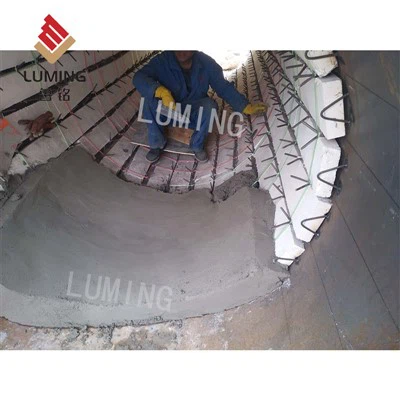
Baffle bricks play a crucial role in various industrial applications, especially in high - temperature environments such as furnaces and kilns. As a baffle brick supplier, I often encounter questions from customers regarding the protection of these bricks from the elements. In this blog, I will explore whether baffle bricks need to be protected from the elements and the reasons behind it.
Understanding Baffle Bricks
Baffle bricks, available at Baffle Brick, are designed to control the flow of gases and heat within a combustion chamber. They are made from high - quality refractory materials that can withstand extreme temperatures. These bricks are placed strategically to create a barrier or guide the movement of hot gases, ensuring efficient heat transfer and combustion.
Another related product is the Center - hole Brick, which also contributes to the proper functioning of the combustion system. Center - hole bricks have a central hole that allows for the passage of gases, further enhancing the overall efficiency of the system. Additionally, Ceramic Heat Accumulator is often used in conjunction with baffle bricks to store and release heat, improving energy utilization.
The Impact of Elements on Baffle Bricks
Moisture
Moisture is one of the most significant elements that can affect baffle bricks. When baffle bricks are exposed to moisture, it can lead to several problems. Firstly, water can penetrate the pores of the bricks. During the heating process, the water turns into steam. The expansion of steam within the brick can cause internal stress, leading to cracking or spalling of the brick surface. This not only reduces the structural integrity of the baffle brick but also affects its ability to control gas flow and heat transfer.
For example, in a situation where a furnace is shut down for maintenance and the baffle bricks are exposed to a humid environment, moisture can seep into the bricks. When the furnace is restarted, the rapid heating can cause the moisture to turn into steam, potentially damaging the bricks.
Temperature Fluctuations
Baffle bricks are designed to operate in high - temperature environments. However, sudden and extreme temperature fluctuations can have a negative impact on them. When the temperature changes rapidly, the bricks expand and contract at different rates. This differential expansion and contraction can create internal stresses, leading to the formation of cracks.
In an industrial setting, if there are frequent start - stop cycles of a furnace, the baffle bricks are subjected to repeated temperature changes. Over time, these temperature fluctuations can weaken the bricks, reducing their service life.
Chemical Exposure
In some industrial processes, baffle bricks may be exposed to various chemicals. These chemicals can react with the refractory materials of the baffle bricks, causing corrosion or erosion. For instance, in a chemical manufacturing plant, the presence of acidic or alkaline gases can corrode the surface of the baffle bricks. This corrosion can gradually wear away the bricks, reducing their thickness and altering their shape, which in turn affects their performance.


Why Protection is Necessary
Prolonging Service Life
Protecting baffle bricks from the elements can significantly extend their service life. By preventing moisture ingress, reducing the impact of temperature fluctuations, and minimizing chemical exposure, the bricks can maintain their structural integrity and performance for a longer period. This means that industries can avoid frequent replacements of baffle bricks, reducing maintenance costs and downtime.
Ensuring Optimal Performance
The proper functioning of baffle bricks is essential for the efficient operation of furnaces and kilns. When the bricks are protected from the elements, they can maintain their shape, size, and porosity. This ensures that they can effectively control the flow of gases and heat, optimizing the combustion process and improving energy efficiency.
Methods of Protecting Baffle Bricks
Storage
During storage, baffle bricks should be kept in a dry and sheltered area. A warehouse with proper ventilation and humidity control can prevent moisture from accumulating on the bricks. Additionally, the bricks should be stacked in a way that allows for air circulation to further reduce the risk of moisture retention.
Installation
Proper installation is crucial for protecting baffle bricks. The installation process should follow the manufacturer's guidelines to ensure a tight fit and proper sealing. This can prevent the ingress of moisture and chemicals into the brick joints. Moreover, insulation materials can be used around the baffle bricks to reduce the impact of temperature fluctuations.
Coating
Applying a protective coating to the baffle bricks can provide an additional layer of defense against the elements. Coatings can be designed to be resistant to moisture, chemicals, and high - temperature corrosion. There are various types of coatings available in the market, and the choice of coating depends on the specific application and the type of elements the bricks are likely to encounter.
Case Studies
Let's consider two industrial plants, Plant A and Plant B. Plant A did not take any measures to protect its baffle bricks from the elements. The baffle bricks were exposed to a humid environment and frequent temperature fluctuations. As a result, after just a few months of operation, the bricks started to show signs of cracking and spalling. This led to a decrease in the efficiency of the furnace, with increased fuel consumption and reduced product quality.
On the other hand, Plant B implemented a comprehensive protection plan. The baffle bricks were stored in a dry warehouse, installed with proper insulation, and coated with a protective layer. After several years of operation, the baffle bricks in Plant B still maintained their performance, and the furnace continued to operate efficiently with minimal maintenance requirements.
Conclusion
In conclusion, baffle bricks definitely need to be protected from the elements. The impact of moisture, temperature fluctuations, and chemical exposure can significantly affect the performance and service life of these bricks. By implementing proper protection measures such as storage in a dry environment, correct installation, and the use of protective coatings, industries can ensure the long - term performance of their baffle bricks.
If you are in need of high - quality baffle bricks or have any questions regarding their protection and application, I encourage you to reach out to discuss your specific requirements. We are committed to providing the best solutions for your industrial needs.
References
- Refractory Handbook, Third Edition
- Industrial Furnace Technology: Principles and Applications
- Journal of Refractory Materials Research