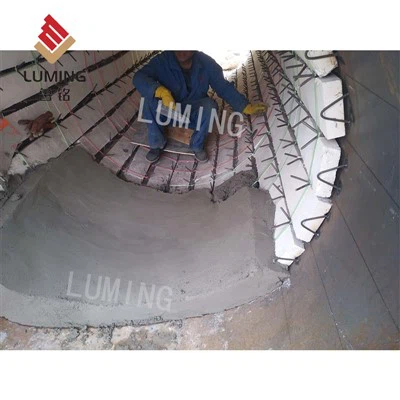
Can mullite brick be used in the leather industry?
As a supplier of mullite bricks, I often get asked about the potential applications of our products in various industries. One question that has come up recently is whether mullite brick can be used in the leather industry. In this blog post, I'll explore this topic in detail and provide some insights based on my experience and knowledge of the properties of mullite bricks.
Understanding Mullite Bricks
Before delving into their potential use in the leather industry, let's first understand what mullite bricks are. Mullite is a mineral that is formed when aluminosilicate materials are heated to high temperatures. Mullite bricks are refractory materials made from mullite, which have excellent thermal stability, high strength, and good resistance to chemical corrosion. These properties make them suitable for a wide range of high - temperature applications.
There are different types of mullite bricks available in the market, such as Mullite Refractory Brick, Fused Mullite Brick, and High - purity Mullite Brick. Each type has its own unique characteristics and is designed for specific applications.
The Leather Industry's Requirements
The leather industry involves several processes that require specific environmental conditions and equipment. Some of the key processes in leather production include tanning, drying, and finishing.


- Tanning: This is the process of converting raw hides into leather. Tanning is usually carried out in large vats at relatively low to moderate temperatures. The chemicals used in tanning, such as chromium salts, can be corrosive.
- Drying: After tanning, the leather needs to be dried. This can be done using various methods, including air - drying, vacuum - drying, or using heated chambers. High - temperature drying can help speed up the process, but it also requires equipment that can withstand the heat.
- Finishing: The finishing process involves applying various coatings and treatments to the leather to improve its appearance, durability, and feel. Some finishing processes may involve the use of heat and chemicals.
Potential Applications of Mullite Bricks in the Leather Industry
1. Drying Chambers
One of the most promising applications of mullite bricks in the leather industry is in drying chambers. As mentioned earlier, leather drying can be accelerated by using heat. Mullite bricks, with their excellent thermal stability and high - temperature resistance, can be used to line the walls and floors of drying chambers.
The high thermal conductivity of mullite bricks allows for efficient heat transfer, ensuring that the leather is dried evenly. Additionally, their resistance to chemical corrosion means that they can withstand the chemicals that may be present in the leather during the drying process. For example, if there are residual tanning chemicals on the leather, the mullite bricks will not be easily damaged by them.
2. Heat - Treatment Equipment
In some leather finishing processes, heat treatment is required to enhance the properties of the leather. Mullite bricks can be used in the construction of heat - treatment equipment, such as ovens and kilns. Their high strength and ability to maintain their shape at high temperatures make them ideal for these applications.
Moreover, mullite bricks can help to maintain a stable temperature inside the heat - treatment equipment, which is crucial for achieving consistent results in leather finishing. This is because they have a low thermal expansion coefficient, which means that they do not expand or contract significantly with temperature changes.
3. Chemical - Resistant Linings
As the leather industry uses a variety of chemicals in its processes, there is a need for equipment that can resist chemical corrosion. Mullite bricks have good resistance to many of the chemicals used in tanning and finishing, such as acids, alkalis, and salts.
They can be used to line the vats and tanks used in tanning and other chemical - based processes. This not only protects the equipment from corrosion but also helps to maintain the purity of the chemicals and the quality of the leather.
Advantages of Using Mullite Bricks in the Leather Industry
1. Long - Term Durability
Mullite bricks are known for their long - term durability. In the harsh environment of the leather industry, where there are high temperatures, chemicals, and mechanical stresses, mullite bricks can last for a long time without significant wear and tear. This reduces the need for frequent replacement of equipment linings and components, saving both time and money for leather manufacturers.
2. Energy Efficiency
The high thermal conductivity of mullite bricks means that they can transfer heat more efficiently than many other materials. This results in lower energy consumption in heating equipment such as drying chambers and heat - treatment ovens. Over time, the energy savings can be substantial, making mullite bricks a cost - effective choice for the leather industry.
3. Improved Product Quality
By providing a stable and consistent environment for leather processing, mullite bricks can contribute to improved product quality. For example, in drying chambers, the even heat distribution provided by mullite bricks ensures that the leather dries uniformly, reducing the risk of uneven shrinkage and other quality issues.
Challenges and Considerations
1. Cost
One of the main challenges of using mullite bricks in the leather industry is the cost. Mullite bricks are generally more expensive than some other refractory materials. However, it's important to consider the long - term benefits, such as durability and energy savings, which can offset the initial investment.
2. Installation
Proper installation of mullite bricks is crucial to ensure their optimal performance. Specialized skills and knowledge are required for the installation process, as incorrect installation can lead to issues such as poor heat transfer and premature failure of the bricks.
Conclusion
In conclusion, mullite bricks have significant potential for use in the leather industry. Their unique properties, including high - temperature resistance, chemical corrosion resistance, and good thermal conductivity, make them suitable for applications such as drying chambers, heat - treatment equipment, and chemical - resistant linings.
While there are some challenges, such as cost and installation requirements, the long - term benefits of using mullite bricks, including durability, energy efficiency, and improved product quality, make them a viable option for leather manufacturers.
If you are in the leather industry and are interested in exploring the use of mullite bricks in your operations, I encourage you to contact us for more information. We can provide you with detailed product specifications, technical support, and help you determine the most suitable type of mullite brick for your specific needs. Let's start a conversation about how our mullite bricks can enhance your leather production processes.
References
- Handbook of Refractory Materials
- Leather Processing Technology Manual
- Journal of Thermal and Chemical Engineering Research