Can mullite brick be used in the glass industry?
As a supplier of mullite bricks, I am often asked whether mullite bricks can be used in the glass industry. The answer is a resounding yes, and in this blog post, I will delve into the reasons why mullite bricks are an excellent choice for the glass - making process.
Properties of Mullite Bricks
Mullite bricks are known for their unique combination of properties that make them suitable for high - temperature applications. Mullite is a mineral with the chemical formula 3Al₂O₃·2SiO₂. When used to make bricks, these materials offer several key advantages.
High Refractoriness
One of the most important properties for any material used in the glass industry is refractoriness. Glass melting furnaces operate at extremely high temperatures, typically ranging from 1400°C to 1600°C. Mullite bricks have a high melting point, usually above 1800°C. This high refractoriness allows them to withstand the intense heat in glass melting furnaces without significant deformation or melting, ensuring the structural integrity of the furnace lining.
Good Thermal Shock Resistance
The glass - making process involves rapid heating and cooling cycles. For example, when a batch of glass is melted and then removed from the furnace, the temperature inside the furnace can change drastically. Mullite bricks have excellent thermal shock resistance, which means they can endure these sudden temperature changes without cracking or spalling. This property is crucial for maintaining the longevity of the furnace lining and reducing maintenance costs.
Low Thermal Conductivity
In a glass melting furnace, it is essential to minimize heat loss to improve energy efficiency. Mullite bricks have relatively low thermal conductivity, which helps to keep the heat inside the furnace. By reducing heat loss, energy consumption can be decreased, leading to cost savings for glass manufacturers.
Chemical Inertness
Glass is made from a variety of raw materials, including silica, soda ash, and limestone. During the melting process, these materials can react with the furnace lining. Mullite bricks are chemically inert to many of the substances present in glass - making. They do not react easily with molten glass or the gases produced during the melting process, preventing contamination of the glass and ensuring the quality of the final product.
Applications in the Glass Industry
Mullite bricks find various applications in the glass industry.
Furnace Linings
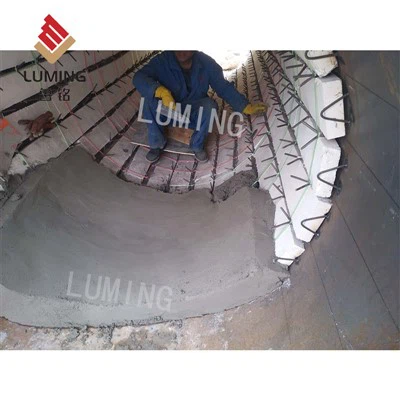
The most common application of mullite bricks in the glass industry is as furnace linings. They are used to line the walls, roofs, and floors of glass melting furnaces. The high refractoriness and thermal shock resistance of mullite bricks make them ideal for protecting the furnace structure from the high - temperature environment. For instance, in a float glass furnace, mullite bricks can be used in the melting zone, where the temperature is the highest.
Regenerators
Regenerators are an important part of glass melting furnaces. They are used to pre - heat the combustion air before it enters the furnace, which improves energy efficiency. Mullite bricks can be used in the regenerator chambers. Their low thermal conductivity helps to retain the heat stored in the regenerator, and their chemical inertness ensures that they do not react with the hot gases passing through.
Feeder Channels
Feeder channels are used to transport the molten glass from the furnace to the forming equipment. Mullite bricks can be used to line these channels. Their smooth surface and chemical inertness prevent the adhesion of molten glass and ensure a continuous and smooth flow of glass.
Types of Mullite Bricks for the Glass Industry
There are different types of mullite bricks available for the glass industry.
Fused Mullite Brick
Fused mullite bricks are made by fusing high - purity alumina and silica at very high temperatures. These bricks have a dense structure and excellent mechanical properties. They are particularly suitable for applications where high wear resistance is required, such as in the areas of the furnace that are in direct contact with the flowing molten glass. You can learn more about Fused Mullite Brick.
Mullite Fire Brick
Mullite fire bricks are a more cost - effective option. They are made by firing a mixture of mullite and other refractory materials. These bricks still offer good refractoriness and thermal shock resistance, making them a popular choice for general furnace lining applications. Check out Mullite Fire Brick for more details.
Mullite Refractory Brick
Mullite refractory bricks are designed to meet the specific requirements of high - temperature refractory applications. They have a balanced combination of properties, including high refractoriness, thermal shock resistance, and chemical inertness. If you are looking for a versatile mullite brick for your glass - making furnace, Mullite Refractory Brick might be the right choice.
Advantages for Glass Manufacturers
Using mullite bricks in the glass industry offers several advantages for glass manufacturers.
Cost - effectiveness
Although the initial cost of mullite bricks may be higher than some other refractory materials, their long - term cost - effectiveness is significant. Their durability and low maintenance requirements mean that glass manufacturers can save on replacement and repair costs over time. Additionally, the energy savings resulting from their low thermal conductivity can also lead to cost reductions.
Improved Glass Quality
The chemical inertness of mullite bricks prevents contamination of the molten glass. This ensures that the glass produced has a high quality, with fewer impurities and defects. Higher - quality glass can command a higher price in the market, increasing the profitability of glass manufacturers.


Enhanced Furnace Performance
The properties of mullite bricks, such as high refractoriness and thermal shock resistance, contribute to the overall performance of the glass melting furnace. A well - lined furnace can operate more efficiently, with fewer breakdowns and longer service intervals. This leads to increased production capacity and improved productivity for glass manufacturers.
Conclusion
In conclusion, mullite bricks are highly suitable for use in the glass industry. Their unique combination of properties, including high refractoriness, good thermal shock resistance, low thermal conductivity, and chemical inertness, make them an ideal choice for various applications in glass melting furnaces. Whether you need a lining for your furnace, a material for your regenerators, or a solution for your feeder channels, mullite bricks can meet your requirements.
If you are a glass manufacturer looking for high - quality mullite bricks for your production process, I encourage you to contact us for a detailed discussion. We can provide you with the right type of mullite bricks based on your specific needs and offer professional advice on installation and maintenance.
References
- Kriven, W. M., & Komarneni, S. (Eds.). (2015). Mullite: Structure, Properties, and Applications. Springer.
- Reed, J. S. (1995). Principles of Ceramics Processing. Wiley.
- Glass Manufacturing Handbook: Technology, Processes, and Standards. (2018). CRC Press.