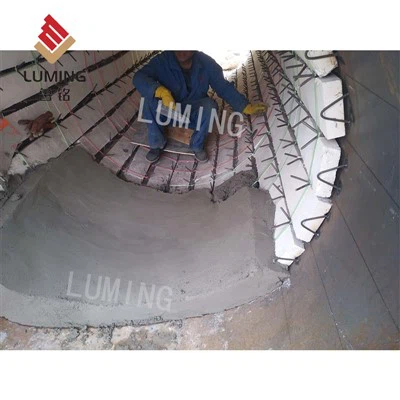
Can center - hole bricks be used for water tanks? This is a question that often comes up in various construction and engineering discussions. As a center - hole brick supplier, I have encountered this query numerous times from customers, and I believe it's essential to delve into this topic comprehensively.
Understanding Center - Hole Bricks
Center - hole bricks, also known as perforated bricks, are bricks that have one or more holes through their body. These holes serve multiple purposes. Firstly, they reduce the weight of the brick, making them easier to handle during construction. Secondly, they can improve the insulation properties of the structure as the air trapped in the holes acts as an insulator. Thirdly, they can save on raw materials, which in turn can lead to cost savings.
The manufacturing process of center - hole bricks involves carefully controlling the size, shape, and distribution of the holes. This process ensures that the bricks maintain their structural integrity while still offering the benefits mentioned above. Center - hole bricks are commonly used in building walls, both load - bearing and non - load - bearing, in various types of construction projects, from residential buildings to commercial complexes.
The Concept of Using Center - Hole Bricks for Water Tanks
The idea of using center - hole bricks for water tanks might seem unconventional at first glance. Traditionally, water tanks are made from materials like concrete, steel, or plastic. However, in some regions where these materials are scarce or expensive, there has been an interest in exploring alternative options.
One of the potential advantages of using center - hole bricks for water tanks is their availability. As a center - hole brick supplier, I know that these bricks are relatively easy to produce and are widely available in many markets. They can also be locally sourced, which can reduce transportation costs and the environmental impact associated with long - distance shipping.
Another advantage is the potential for creating a more customized water tank. Center - hole bricks can be laid in different patterns, allowing for the construction of tanks with various shapes and sizes. This flexibility can be particularly useful in situations where space is limited or where a specific tank design is required.


Technical Considerations
When considering using center - hole bricks for water tanks, several technical factors need to be taken into account.
Structural Integrity
The primary concern is whether the center - hole bricks can withstand the hydrostatic pressure exerted by the water in the tank. The hydrostatic pressure increases with the depth of the water, and the bricks need to be strong enough to resist this pressure without cracking or collapsing.
The strength of center - hole bricks depends on several factors, including the type of clay used, the manufacturing process, and the size and distribution of the holes. In general, high - quality center - hole bricks with proper reinforcement can be designed to handle significant hydrostatic pressure. However, it is crucial to conduct a structural analysis to ensure that the tank can safely hold the intended volume of water.
Water Tightness
Water tightness is another critical factor. Center - hole bricks have holes, which can potentially allow water to seep through. To make the tank water - tight, a waterproofing layer needs to be applied. This can be achieved through various methods, such as using waterproofing membranes or applying a special waterproofing mortar.
The waterproofing layer not only prevents water from leaking out of the tank but also protects the bricks from the corrosive effects of the water. It is essential to ensure that the waterproofing layer is properly installed and maintained to ensure the long - term performance of the tank.
Chemical Compatibility
The water stored in the tank may contain various chemicals, such as chlorine, minerals, and microorganisms. These chemicals can react with the bricks and the waterproofing materials, potentially causing damage over time. It is important to choose bricks and waterproofing materials that are chemically compatible with the water to be stored.
Case Studies and Examples
There have been some successful examples of using center - hole bricks for water tanks in certain regions. In some rural areas, local communities have constructed small - scale water tanks using center - hole bricks. These tanks have been used for storing rainwater for domestic use or for irrigation purposes.
One such example is a community in a developing country where a group of farmers built a water tank using center - hole bricks. They used a waterproofing membrane made from recycled plastic to line the tank and reinforced the structure with steel bars. The tank has been in operation for several years, providing a reliable source of water for their crops.
However, it is important to note that these successful cases often involve careful planning, proper construction techniques, and regular maintenance. Not all attempts to use center - hole bricks for water tanks have been successful, and there have been instances of leaks and structural failures.
Related Products and Technologies
In the context of using center - hole bricks for water tanks, there are several related products and technologies that can enhance the performance of the tank.
Baffle Brick can be used to improve the flow of water inside the tank. Baffle bricks are designed to create a more uniform flow pattern, which can help prevent sedimentation and improve the overall efficiency of the tank.
The Regenerative Burner System can be used in the manufacturing process of center - hole bricks to improve their quality and strength. This system helps in achieving a more consistent firing temperature, which can result in bricks with better physical properties.
Ceramic Heat Accumulator can also play a role in the production of high - quality center - hole bricks. By storing and releasing heat during the firing process, the ceramic heat accumulator can improve the energy efficiency of the manufacturing process and produce bricks with better insulation properties.
Conclusion
In conclusion, while using center - hole bricks for water tanks is a viable option in certain situations, it requires careful consideration of various technical factors. With proper planning, design, and construction techniques, center - hole bricks can be used to build functional and reliable water tanks.
As a center - hole brick supplier, I am committed to providing high - quality bricks and technical support to customers interested in exploring this option. If you are considering using center - hole bricks for a water tank project, I encourage you to reach out for further discussion. We can work together to assess the feasibility of your project, provide the necessary materials, and offer guidance on the construction process.
References
- "Building Construction Handbook" by Frank R. Dischinger
- "Water Tank Design and Construction Manual" by the World Bank
- "Materials Science for Civil Engineers" by Arthur H. Nilson